
Classic men’s watchesMen's
Classic women’s watchesWomen's
SmartwatchesSmart
Brands
Other
Tags: Selection Guide | Men's | Elegance
30.1.2026 | 5 MIN
A man's first "proper" watch should be a dress watch. Compared to sports or fashion watches, they're far more versatile. They work with a suit at formal events, with a shirt at the office, and even at a backyard barbecue with friends. Which mistakes should you avoid when choosing one?
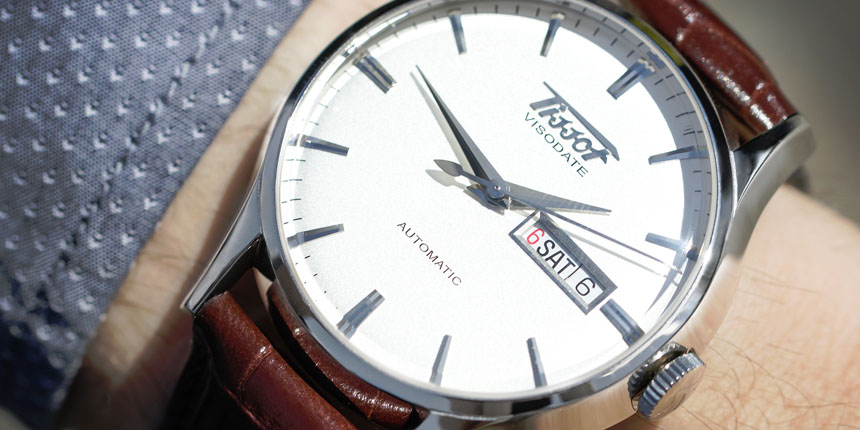
Which watch should you wear to a formal occasion? And which mistakes should you avoid when you're headed to an event where a certain level of elegance, style and etiquette is expected?
We've picked the five most common missteps that could easily lead to a social faux pas.
One of the biggest mistakes is assuming any watch can be worn anywhere. In reality, each style of watch shines in a different setting.
A chronograph (stopwatch) is a function typical of sports watches. In sport, time is of the essence and needs to be measured. At formal events it’s the opposite. We’re with people we care about and we’ve made time for them. We don’t want to signal that we have other plans or that we’re in a hurry. And you definitely don’t need to time anything at a formal occasion.

Mistake: A beautiful Hamilton watch, but for formal occasions it’s too bold, too busy, and too large.
Beyond the symbolism, there’s another reason: chronographs have busy dials, tend to be larger, and often feature bold color accents—exactly what you don’t want in a dress watch. That’s the exact opposite of what we look for in a dress watch, best summed up as: minimalist.

A great choice: The minimalist Hamilton Intra-Matic with no unnecessary complications.
Large watches can be seen as a trend, but also as a style—and that’s fine. For casual activities or watching a game at the stadium you can fully express your personal style.
But at formal events, a traditional look—let’s say conservative—is more appropriate. In other words, with dress watches we’re after elegance that complements a jacket or suit.

Mistake: These Invictas are fine with a casual outfit, but with a jacket? They’re too big and too bold.
A dress watch should therefore be slim enough to tuck under a shirt cuff. A thickness of up to 12 mm is recommended.
And it shouldn’t be too large for your wrist, so focus on the lug-to-lug length to ensure it doesn’t overhang your wrist and draw attention—a dress watch shouldn’t. Case diameter is another good guide. If you keep it at 42 mm or under, you’re in the sweet spot. Again, consider the size of your wrist: some will be better served by 36 mm, others will feel more comfortable with 40 mm.

A great choice: The elegant Tissot Le Locle slides under the sleeve and is proportionate to the wrist.
Another common mistake when choosing a dress watch is color selection. Color plays a crucial role with dress watches. But it’s enough to respect a simple rule: a watch for a formal event should be minimalist.

Mistake: At a party these would be a great conversation starter. At a black-tie event, you need to impress differently.
For strictly formal events, it’s important to follow etiquette for case color (silver, gold, rose gold), strap (black, brown) and dial (black, white, cream or silver). For less formal occasions, you can relax these rules a bit.
For joyous occasions like a celebration or wedding, you can even opt for a colored dial. A blue dial, for instance, is still considered a very dress-appropriate choice today. But the rule still stands: the watch should be elegant, minimalist, and not shout for attention. Ideally, any color accent should correspond with other details of your overall outfit.

A great choice: The Certina Big Date remains very elegant, and the colored dial matches the tie.
When it comes to materials, it’s really quite simple: metal and leather.
Cases should ideally be steel; with more expensive watches, precious metals. But no plastic, resin, etc. So plastic Swatch or G-Shock won’t cut it.

Mistake: The G-Shock GA-100 is great for downtime, but not for a gala evening.
It’s similar with straps. Leather is always the most elegant. You can choose eco-friendly materials too, but leave NATO straps, silicone or plastic for another time.
Metal bracelets (steel or other metals) are also fine—but again, only in the basic metal tones.

A great choice: The Tissot Tradition pairs a steel case with a leather strap.
It often happens that you own a truly beautiful dress watch. You didn’t forget any of the important rules while choosing it. It’s proportionate, elegant, and minimalist in design. But the mistake comes when you finish pairing it with your outfit.
A watch isn’t a stand-alone accessory; it’s part of a whole that needs to be in visual harmony. To put it simply: metal should match metal and leather should match leather.

Mistake: The belt and strap don’t match—let alone the watch’s overall sporty style. That wouldn’t fly at a graduation.
Case color should ideally match all your metal accessories, such as cufflinks, tie bar, and belt buckle. The same applies to a metal bracelet.
The color of a leather strap should match your leather shoes, belt, and possibly gloves. If you wear different shoe colors, get multiple straps to match your watches in the corresponding shades.

A great choice: a black strap that matches black shoes.
This article originally covered only five common mistakes when choosing a watch for a formal occasion. But lately, even at truly formal events, you increasingly see men constantly looking at their watches—not because someone asked for the time, but because a notification came in, they’re replying to a message, or just scrolling through “what’s new.”
We live in a time when we want to monitor our health and ideally always be online and reachable. But you probably feel it’s not the ideal choice here.

You just can’t tell: Is he going to play tennis or to a business meeting?
Smartwatches light up on your wrist, sometimes vibrate, and are the opposite of a dress watch in every respect—both aesthetically and socially. We haven’t swapped a suit for comfy sweats or patent leather shoes for trail runners.
Watches are still a fundamentally important accessory. So leave smartwatches for sport and leisure, and treat yourself to a perfectly elegant watch to go with a perfectly tailored jacket.

13.9.2022
TOP 5 smart watches – What's the right fit for you?

